
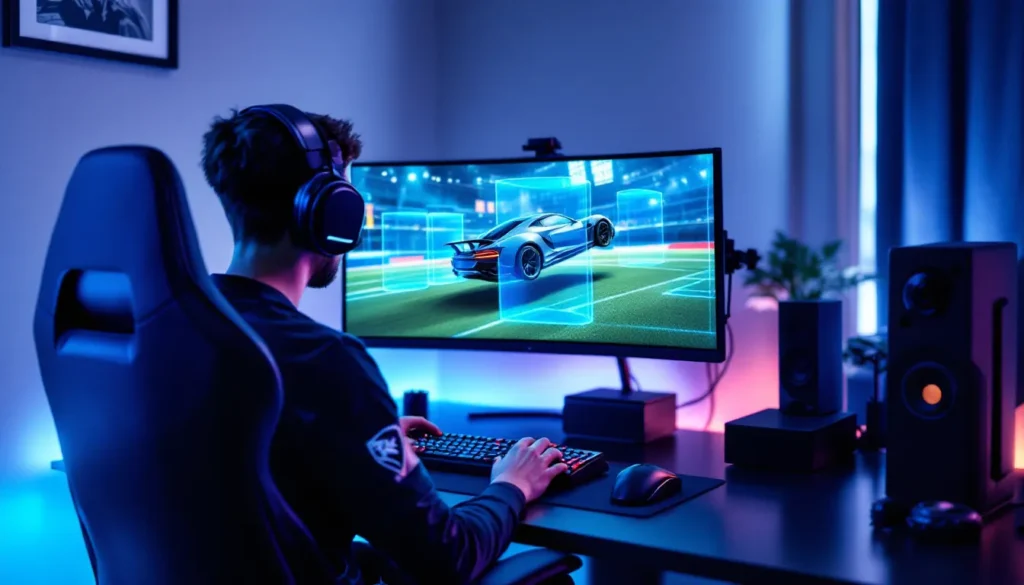
Every flick, every aerial, every shot in Rocket League comes down to one invisible factor: your car’s hitbox. You might’ve noticed that some cars feel bulkier while others seem to slice through the air with precision. That’s not just a feeling, it’s physics.
Understanding Rocket League car hitboxes is the difference between whiffing easy shots and consistently nailing tight angles. Whether you’re grinding ranked or trying to break into competitive play, knowing how these invisible collision boxes work will level up your game faster than hours of unstructured practice. This guide breaks down the six hitbox types, their exact dimensions, which cars use them, and how to pick the one that matches your playstyle in 2026.
Key Takeaways
- Rocket League hitboxes are invisible 3D collision boxes that determine how your car contacts the ball, and choosing the right one directly impacts your consistency and gameplay performance.
- The six standardized hitbox types—Octane, Dominus, Plank, Breakout, Hybrid, and Merc—each offer unique advantages; the Octane is the most popular and versatile for beginners, while Dominus excels for aggressive strikers and ground plays.
- Match your hitbox to your playstyle: offensive players should choose Dominus or Plank for extra reach and power, defensive players should prefer Octane for better clears, and freestylers should stick with Octane for smoother air control.
- Hitbox dimensions like length, height, and width directly influence ball control, aerial consistency, and mechanical techniques—for example, the Plank’s flatness generates more shot power while the Octane’s height makes flip resets easier.
- Switching hitboxes requires 20–50 hours of deliberate practice to build new muscle memory; start in freeplay and casual matches, focus on fundamentals first, and expect a temporary performance dip before your consistency improves.
- Paid cosmetic cars perform identically to default cars within the same hitbox type, and pros have ranked up with every hitbox except maybe the Merc—consistency and commitment matter far more than hitbox choice alone.
What Are Hitboxes in Rocket League?
A hitbox is the invisible 3D rectangular box that surrounds every car in Rocket League. It defines where your car can make contact with the ball, other players, and the arena. The visual model of your car, the sleek paint job, the spoiler, the wheels, doesn’t actually matter for gameplay. What counts is the hitbox underneath.
Psyonix standardized Rocket League hit boxes into six distinct types back in 2017, and that system remains in place today. Before standardization, each car had unique collision properties, which made balancing a nightmare. Now, multiple cars share the same hitbox type, so a Fennec and an Octane handle identically even though looking different.
The hitbox determines turning radius, how the car feels in the air, and most importantly, how it contacts the ball. A taller hitbox might make it easier to get under the ball for pops, while a flatter one excels at powerful ground shots and flicks.
Why Hitboxes Matter for Your Gameplay
Choosing the wrong hitbox for your playstyle is like using a sniper rifle in close quarters, it’ll work sometimes, but you’re fighting against the tool. Hitboxes affect three critical areas: ball control, aerial consistency, and mechanical techniques.
Ball control varies dramatically between hitbox types. A wider hitbox gives you more surface area for dribbling and catching awkward bounces, while a longer one lets you reach the ball from further away during 50/50s. If your car’s visual model doesn’t match the hitbox well, you’ll constantly misjudge when contact happens, leading to missed touches.
Aerial consistency comes down to predictability. Some hitboxes rotate faster in the air, making freestyle shots easier but also harder to control for precise redirects. Others feel stable and planted, which is why many pros stick to one hitbox type for years, they’ve internalized exactly how it behaves in every situation.
Mechanical techniques like flip resets, ceiling shots, and wavedashes all interact with hitbox geometry. The Octane’s taller profile makes flip resets slightly easier because you have more vertical surface to touch the ball with. The Plank’s flat design makes power shots and flicks feel more explosive because of how the hitbox strikes through the ball’s center of mass.
The Six Hitbox Types Explained
Rocket League currently has six standardized hitbox types, each with unique dimensions and handling characteristics. Here’s the full breakdown.
Octane Hitbox
The Octane hitbox is the most popular choice in competitive Rocket League, and for good reason. It’s tall, balanced, and the visual model of the Octane car matches the hitbox almost perfectly, which makes it incredibly intuitive.
This hitbox excels at aerials and ground play equally. The extra height makes it easier to get under the ball for powerful clears and pops, while the centered pivot point gives consistent control during air rolls. It’s the jack-of-all-trades option that works for any playstyle, which is why over 60% of pros use Octane-type cars.
The turning radius is tight, making recoveries and quick adjustments feel responsive. If you’re new to Rocket League or unsure where to start, the Octane hitbox is the safe bet.
Dominus Hitbox
The Dominus hitbox is longer and flatter than the Octane, making it the weapon of choice for players who prioritize ground game and powerful shots. The extended length gives you extra reach during challenges and 50/50s, and many pro player settings show a preference for Dominus among aggressive strikers.
This hitbox shines for flicks and redirect plays. The flat profile allows you to strike through the ball’s equator more consistently, generating higher shot power with less effort. But, the lower height means you’ll need better timing to get under the ball for aerials and backboard clears.
The Dominus feels slightly heavier in the air compared to the Octane, which can be a pro or con depending on your style. Freestylers sometimes avoid it because of the wider turning radius, but for players who live in the opponent’s half, it’s deadly.
Plank Hitbox
The Plank hitbox is the flattest and longest option available, designed for maximum reach and devastating power shots. Cars like the Batmobile and the ’16 Batmobile use this hitbox, and it’s a favorite among players who want to dominate ground plays and flicks.
The extreme length makes this hitbox a 50/50 monster. You can challenge balls from angles that other hitboxes simply can’t reach, and the flatness generates insane power on shots when you connect cleanly. The trade-off is a steep learning curve, the Plank’s height makes it tricky to get under the ball, and aerials require more precise timing.
Because of the unique dimensions, the Plank feels very different from other hitboxes. It’s not a beginner-friendly choice, but in the hands of a skilled player, it’s one of the most mechanically rewarding options in the game.
Breakout Hitbox
The Breakout hitbox sits somewhere between the Dominus and the Plank, long, but not quite as flat. It’s one of the least popular hitbox types in 2026, but that doesn’t mean it’s bad. It just requires a specific playstyle to unlock its potential.
This hitbox excels at dribbling and ball control due to its length and moderate height. The wider surface area makes catching awkward bounces more forgiving, and the handling feels responsive during recoveries. But, it lacks the raw power of the Dominus and the aerial dominance of the Octane, leaving it in an awkward middle ground.
Some players swear by the Breakout for its precision in tight spaces, especially in 1v1 scenarios. If you value technical control over raw aggression, it’s worth testing.
Hybrid Hitbox
The Hybrid hitbox blends traits from the Octane and Dominus, offering a middle-ground option for players who want versatility without committing to one extreme. Cars like the Endo and Venom use this hitbox, though it’s far less common in competitive play.
The dimensions are slightly longer than the Octane but shorter than the Dominus, with a moderate height that works for both ground and aerial play. It doesn’t dominate any one category, but it doesn’t have glaring weaknesses either.
The Hybrid feels like a compromise, decent at everything, exceptional at nothing. That’s not necessarily a bad thing for casual play, but at high ranks, specialists tend to outperform generalists, which is why this hitbox rarely appears in competitive tier lists.
Merc Hitbox
The Merc hitbox is the tallest and bulkiest option, resembling a literal box. It’s almost comically large, and because of that, it’s the least used hitbox in competitive Rocket League.
That said, the Merc has niche strengths. The extra height makes it incredibly easy to challenge aerial balls and win headers. The wide profile can bully opponents during physical challenges, and some players enjoy the novelty of using an off-meta choice.
The major downside is maneuverability. The Merc feels sluggish in the air and has a wider turning radius, making fast recoveries and tight adjustments harder. It’s a fun meme pick for casual lobbies, but don’t expect to climb ranked with it unless you’re already mechanically gifted.
Hitbox Dimensions and Statistics Breakdown
Here are the exact dimensions for each hitbox type as of 2026. These numbers matter if you’re trying to min-max your gameplay or understand why certain cars feel different.
Octane Hitbox:
- Length: 118.01
- Width: 84.20
- Height: 36.16
- Elevation: 34.16
Dominus Hitbox:
- Length: 127.93
- Width: 83.28
- Height: 31.30
- Elevation: 31.30
Plank Hitbox:
- Length: 128.82
- Width: 84.67
- Height: 29.39
- Elevation: 29.39
Breakout Hitbox:
- Length: 131.49
- Width: 80.52
- Height: 30.30
- Elevation: 31.30
Hybrid Hitbox:
- Length: 127.02
- Width: 82.19
- Height: 34.16
- Elevation: 32.99
Merc Hitbox:
- Length: 120.87
- Width: 83.91
- Height: 41.66
- Elevation: 38.52
The elevation stat refers to how high the hitbox sits off the ground. A higher elevation can make ground dribbles feel floatier but helps with popping the ball up. Lower elevation means better power shots but harder pops.
Width doesn’t vary as dramatically as length or height, which is why length and height are the main differentiators between hitbox types. If you’re wondering why the Dominus feels so much longer than the Octane, those ~10 units of extra length make a noticeable difference during 50/50 challenges.
Most Popular Cars for Each Hitbox Type
Every car in Rocket League is assigned to one of the six hitbox types. Here are the most popular and competitive-viable options for each category.
Octane Hitbox:
- Octane (the default and most popular)
- Fennec (favorite among pros for its boxy visual match)
- Takumi, Marauder, Proteus
Dominus Hitbox:
- Dominus (classic choice)
- ’89 Batmobile, Aftershock, Imperator DT5
- DeLorean Time Machine
Plank Hitbox:
- Batmobile (2016 edition)
- Mantis, Paladin, Twin Mill III, Centio
Breakout Hitbox:
- Breakout (original)
- Animus GP, Samurai, Cyclone
Hybrid Hitbox:
- Endo, Venom, X-Devil, Jäger 619
- Esper, Nimbus
Merc Hitbox:
- Merc (the meme king)
- Battle Bus
The Fennec has exploded in popularity since its release because its visual model matches the Octane hitbox almost perfectly. Players report that it “feels” more accurate, even though mechanically it’s identical to the Octane. Perception matters, and when you can see exactly where your hitbox is, your touches become more consistent.
For players looking to improve consistency with weapon builds and competitive strategies, sticking to cars with clean visual-to-hitbox alignment is a smart move.
How to Choose the Right Hitbox for Your Playstyle
Picking a hitbox isn’t about copying pros, it’s about finding what fits your strengths and the role you play. Here’s how to match hitbox to playstyle.
Offensive vs. Defensive Playstyles
If you’re an aggressive striker who spends most of the game in the attacking third, the Dominus or Plank hitboxes will serve you well. The extra length gives you better reach for challenges, and the flat profile generates more power on shots. You’ll win more 50/50s and put more pressure on goalies.
Defensive players should lean toward the Octane or Hybrid hitboxes. The extra height makes it easier to get under the ball for clears and backboard saves. The tight turning radius helps with recoveries and repositioning, which are critical when you’re last man back.
Freestyling and Aerial Play
Freestylers and aerial specialists almost universally prefer the Octane hitbox. The centered pivot point makes air rolls feel smooth and predictable, and the height gives you more surface area to hit flip resets. The Fennec is especially popular in the freestyle community because of its visual clarity.
If you’re grinding aerial packs and ceiling shots, avoid the Plank and Breakout hitboxes. Their length makes them harder to control during fast spins, and the lower height makes flip resets less forgiving.
Ground Game and Flicks
For players who dominate 1v1s or specialize in dribbling and flicks, the Dominus or Plank hitboxes are ideal. The flat profile allows you to strike through the ball’s center of mass, generating explosive power with minimal setup. You’ll also have an easier time scooping the ball up for air dribbles.
The Octane is still viable for ground game, but if you’re trying to optimize for raw shot power and flick consistency, the longer hitboxes have a mechanical edge.
Hitbox Myths and Common Misconceptions
Let’s clear up some hitbox myths that still circulate in 2026.
Myth: Paid cars have better hitboxes.
False. All cars within the same hitbox type are mechanically identical. A $20 DLC car performs exactly the same as a default car with the same hitbox. The only difference is cosmetics and how well the visual model matches the hitbox.
Myth: Smaller cars are faster.
Nope. Every car in Rocket League has the same top speed, acceleration, and boost consumption. The hitbox doesn’t affect movement speed at all, only how the car contacts the ball and other objects.
Myth: The Fennec is better than the Octane.
Mechanically, they’re identical. The Fennec just has a blockier visual model that aligns better with the Octane hitbox, which can make touches feel more predictable. It’s a psychological advantage, not a statistical one.
Myth: You need to switch hitboxes to rank up.
Not true. Pros have hit SSL with every hitbox type except maybe the Merc. Consistency matters more than hitbox choice. If you’ve mained the Octane for 500 hours, switching to Dominus will tank your performance in the short term, even if Dominus theoretically fits your style better.
Myth: Hitboxes change between patches.
Psyonix hasn’t altered hitbox dimensions since the 2017 standardization. New cars are assigned to existing hitbox types, but the six core types remain unchanged. If a car feels different after a patch, it’s likely due to server performance or placebo effect.
Pro Player Hitbox Preferences and Trends
The pro scene heavily favors the Octane hitbox, but there’s more variety than you might expect. As of the 2026 RLCS season, roughly 65% of pros use Octane-type cars, with the Fennec being the most popular specific model.
The Dominus holds around 25% of the pro player base, especially among strikers and offensive midfielders. Players like GarrettG and Fairy Peak have built entire careers around mastering the Dominus, using its length and power for dominant ground plays.
The remaining 10% is split between Plank, Breakout, and the occasional Hybrid. The Batmobile (Plank) had a resurgence in 2024-2025 when several EU pros started using it for its unique challenge angles, but it’s still a niche pick.
Interestingly, hitbox trends shift based on region. North American pros lean harder into Octane, while European and South American players experiment more with Dominus and Plank hitboxes. The meta isn’t static, what’s optimal changes as new techniques are discovered and the skill ceiling rises.
One thing is consistent: pros stick with one hitbox for years. Switching mid-career is rare because muscle memory is so deeply ingrained. If you’re serious about improving, pick a hitbox and commit to it for at least 100 hours before considering a switch.
Tips for Adapting to a New Hitbox
Switching hitboxes will feel awkward at first, but you can speed up the adjustment process with deliberate practice.
Start with freeplay and training packs instead of jumping straight into ranked. Spend at least 30 minutes per session just hitting the ball around, getting a feel for how the new hitbox contacts it. Pay attention to where you expect to make contact versus where you actually do, that gap is what you’re training away.
Focus on basic mechanics first. Relearn your ground shots, aerials, and power clears before attempting advanced techniques like flip resets or ceiling shots. If your fundamentals are shaky, everything else will be too.
Use custom training packs that focus on consistency rather than flashy plays. Packs like “Ground Shots” and “Aerial Pass” are perfect for ingraining the new hitbox’s timing. Repeat the same shot 20+ times in a row until it feels automatic.
Play casual matches for your first 10-20 games with the new hitbox. Ranked pressure will mess with your adjustment process. You need low-stakes reps where you can experiment without worrying about your rank.
Compare visual models if you’re struggling. If you’re switching from Octane to Dominus, pick a Dominus car with a clean, predictable design. Avoid flashy or bulky visual models that make it harder to judge where your hitbox actually is.
Expect a performance dip for 20-50 hours depending on how long you used your previous hitbox. Don’t get discouraged if you derank temporarily. Your mechanics will catch up once the muscle memory sets in.
Finally, record your gameplay and watch for patterns. Are you whiffing aerials because you’re approaching too shallow? Missing flicks because you’re not timing the dodge correctly? Identifying specific weaknesses will focus your training and speed up adaptation.
Conclusion
Rocket League hitboxes aren’t just trivia, they’re the foundation of every touch, every save, and every goal. Understanding how these invisible collision boxes work gives you a tangible edge, whether you’re grinding ranked or prepping for tournament play.
The Octane remains the safe, versatile choice for most players, but the Dominus and Plank offer legitimate advantages for specific playstyles. Don’t sleep on the less popular options either, off-meta doesn’t mean bad, it just means you need to commit harder to mastering it.
Pick a hitbox that matches how you want to play, stick with it long enough to build muscle memory, and your consistency will skyrocket. The best hitbox is the one you stop thinking about.
More Stories
Rocket League Camera Settings: The Ultimate 2026 Guide to Perfect Your View
The Coolest Rocket League Cars: Ultimate Style Guide for 2026
Justin Rocket League: The Rise of a Freestyle Legend and His Impact on Competitive Play