
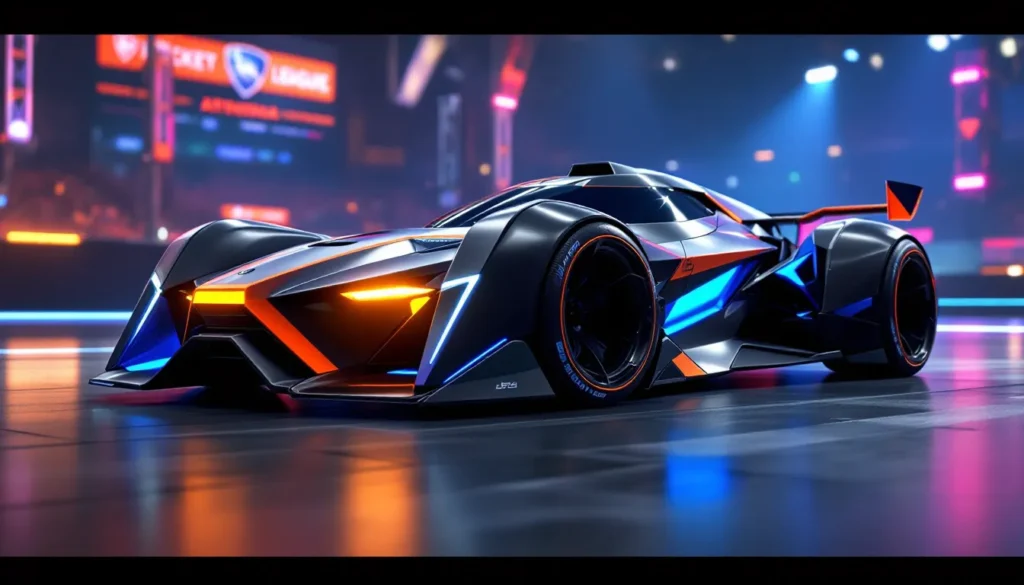
The Athena battle-car has been lurking in Rocket League’s garage since its introduction, and in 2026, it remains one of the most underrated options for players who know how to leverage the Plank hitbox. While the Octane dominates the meta and the Batmobile gets all the love from Plank enthusiasts, the Athena offers a compelling alternative with its distinct visual identity and the same competitive edge that makes flat hitboxes so deadly in the right hands.
Whether you’re hunting for a new main or just curious about what the Athena brings to the table, this guide breaks down everything from unlock methods and hitbox mechanics to advanced strategies and customization options. Let’s jump into why the Athena deserves a spot in your rotation.
Key Takeaways
- The Athena battle-car in Rocket League features the Plank hitbox, offering a wider surface area than most cars that excels in flicks, ground dribbles, and 50/50 challenges for players seeking precision over forgiveness.
- As of March 2026, you can unlock the Athena through the Item Shop (costing 500-800 Credits when available) or player trading (100-300 Credits on trading platforms), though Item Shop purchases are locked to your account.
- While the Athena shares identical base speed and acceleration stats with all other battle-cars, its low profile and long body create a perceived speed advantage and reward skilled aerial play that demands precise positioning.
- The Athena’s main competitive advantages include powerful flick mechanics, stability for ground dribbles, and a low hitbox that makes it a smaller target for demos, though its narrow height makes aerial play and goal-line defense more challenging.
- Mastering the Athena requires 10-20 hours of practice to adjust from the Octane or Dominus, with focus on ground shot training, flick mechanics like Musty flicks, and ground control exercises like Dribbling Challenge 2.
- The Athena offers a visually distinct alternative to popular Plank hitbox cars like the Batmobile while maintaining identical performance, making it ideal for players seeking a rare, modern aesthetic without sacrificing competitive viability.
What Is the Athena in Rocket League?
The Athena is a battle-car in Rocket League that utilizes the Plank hitbox, putting it in the same category as fan favorites like the Batmobile and Mantis. It’s not a car that shows up in every ranked lobby, but its flat, wide profile makes it a strong choice for players who prefer precision hits and powerful flicks over the forgiving all-around nature of the Octane or Dominus.
Origins and Background of the Athena Battle-Car
The Athena was introduced to Rocket League as part of the Collector’s Edition content, which also included other battle-cars like the Triton and Proteus. Unlike DLC cars tied to major franchises or promotional events, the Athena has remained a relatively quiet addition to the roster, no flashy marketing campaigns, no esports spotlight moments. That low profile has kept it off most players’ radars, even though sharing the same hitbox advantages that make the ’16 Batmobile a competitive staple.
It’s worth noting that the Athena isn’t tied to any real-world vehicle or pop culture license. Psyonix designed it as an original creation, which gives it a distinct aesthetic that doesn’t rely on nostalgia or brand recognition.
Athena’s Design and Visual Appeal
Visually, the Athena leans into a sleek, futuristic look with angular lines and a low-slung body that emphasizes its Plank hitbox geometry. The car’s profile is aggressive without being overly busy, no excessive fins or spoilers cluttering the silhouette. It’s got that “concept car” vibe, like something that could’ve rolled out of a sci-fi racing game.
The color separation on the Athena is solid, with distinct primary and accent zones that let custom paint finishes and decals really pop. The front end is sharp and pointed, which visually reinforces the precision you’d expect from a Plank hitbox car. If you’re someone who values a clean, modern aesthetic without the cartoonish proportions of some other battle-cars, the Athena nails that middle ground.
How to Unlock the Athena Battle-Car
Getting your hands on the Athena isn’t as straightforward as grinding through a Rocket Pass or completing a challenge. Its availability has shifted over Rocket League’s lifespan, and understanding the current unlock methods in 2026 will save you time and credits.
Availability and Acquisition Methods
As of March 2026, the Athena battle-car is available through the Item Shop when it rotates into the storefront, or via player trading. It’s not included in any current Rocket Pass tiers, nor is it available through blueprint builds or random drops from post-match rewards.
Originally, the Athena came bundled with the Collector’s Edition of Rocket League, which was a physical and digital package that predated the game’s free-to-play transition in September 2020. Players who owned that edition automatically had the Athena in their garage. After the F2P switch, Psyonix grandfathered those legacy items in for existing owners but removed direct purchase bundles for new players.
Since then, the Athena has appeared sporadically in the Item Shop as part of “Legacy” or “Classic Battle-Car” bundles. These rotations are unpredictable, so if you see it pop up, grab it, there’s no telling when it’ll return.
Cost and Trading Considerations
When the Athena appears in the Item Shop, expect to pay between 500-800 Credits depending on whether it’s sold solo or bundled with decals and wheels. That’s roughly $5-8 USD if you’re buying credits directly, which is standard pricing for non-licensed battle-cars.
If you’d rather skip the wait and trade for it, the Athena’s market value sits pretty low compared to flashier imports. On most trading platforms, you can snag an Athena for 100-300 Credits depending on seller demand and your platform (Steam, Epic, PlayStation, Xbox). Cross-platform trading via Epic Games accounts has made this easier since the unified inventory update, so don’t limit yourself to platform-specific trade hubs.
One thing to note: the Athena isn’t tradeable if you purchase it from the Item Shop. Shop-bought items are locked to your account. Only legacy Athenas from pre-F2P accounts or certain older crates/bundles can be traded, and those are getting rarer by the month.
Athena’s Hitbox and Performance Characteristics
Hitbox choice in Rocket League isn’t just preference, it’s foundational to how your car interacts with the ball, opponents, and the field. The Athena’s Plank hitbox defines its strengths and dictates the playstyles it excels at.
Understanding the Plank Hitbox Type
The Plank hitbox is the longest and flattest of Rocket League’s six standardized hitbox types (Octane, Dominus, Plank, Breakout, Hybrid, Merc). It measures 128.82 length x 84.67 width x 29.39 height (in Unreal Units), making it the widest hitbox in the game and tied with Breakout for the lowest profile.
That width is the Plank’s superpower. When you go for a 50/50 challenge or flick the ball, you’ve got more surface area making contact, which translates to more consistent power transfer and better control over shot direction. The flat top also means dribbling sits lower and more stable on your roof, though it takes practice to adjust if you’re coming from an Octane.
The tradeoff? Aerial play requires more precision. The narrow height means less forgiveness on aerial hits, you need to align your car more accurately to make solid contact. Many professional players gravitate toward the Octane or Dominus because their taller hitboxes are more forgiving in the air, but Plank mains argue that the precision forces better mechanics.
Turning Radius and Handling Profile
The Athena shares the Plank hitbox’s turning radius of 2.42, which is slightly wider than the Octane’s 2.15 but tighter than the Dominus’s 2.77. In practice, this means the Athena turns reasonably well for its length, not as snappy as an Octane when changing direction on the ground, but noticeably more responsive than a Dominus or Breakout.
Handling on the Athena feels smooth and predictable. Many players who track professional player preferences for hitbox selection note that Plank cars require small adjustments to powerslide timing, especially when chaining quick recoveries or wave-dashing. The longer body also means you need to account for slightly more “car” behind your camera when making tight rotations in corners.
If you’re switching from an Octane, expect a learning curve on recoveries and half-flips. The Athena’s length makes it easier to land awkwardly if you don’t commit fully to your flip cancel timing.
Speed and Acceleration Stats
Here’s the thing: all battle-cars in Rocket League have identical base speed and acceleration stats. The Athena accelerates at the same rate as the Octane, Fennec, Dominus, and every other car in the game. Top speed caps at 2300 uu/s (Unreal Units per second) with standard boost, regardless of hitbox.
What changes is perceived speed and momentum. The Athena’s low profile and long body create a sensation of moving faster, especially when powersliding or boosting in a straight line. That’s purely visual and psychological, the numbers are identical, but it matters for player comfort and confidence.
Some players swear the Plank hitbox “feels” heavier or more planted, which likely comes from the wider contact patch and lower center of gravity affecting how the car interacts with the ball and surfaces during dribbles or flips.
Best Playstyles and Strategies for Athena
The Athena isn’t a jack-of-all-trades car. It rewards players who lean into its strengths and build their gameplay around precision, width advantage, and ground-based dominance.
Offensive Techniques and Flick Mechanics
The Athena’s wide hitbox makes it a monster for flicks. When you pop the ball up and dodge into it, that extra width means you’re contacting the ball across a broader surface, generating more power and making it harder for defenders to read the angle.
Musty flicks and 45-degree flicks feel particularly clean with the Athena. The flat top keeps the ball centered during the setup, and the width ensures solid contact even if your timing is slightly off. If you’re someone who loves to beat defenders one-on-one with creative flick angles, the Athena is a strong pick.
Ground dribbles also shine on the Plank hitbox. The ball sits low and stable on the Athena’s roof, making it easier to maintain control during tight maneuvers or fakes. You won’t get the same high-bounce dribbling you’d see with an Octane, but the trade-off is better lateral control and faster pop-up setups.
For power shots, the Athena’s length lets you generate leverage when you flip into the ball from a distance. Time your dodge so the front edge makes contact just as the ball bounces, and you’ll send rockets past goalies who aren’t expecting the pace.
Defensive Positioning and Clearances
Defensively, the Athena’s width is both an asset and a liability. In 50/50 challenges, you’ve got more car to throw at the ball, which often results in winning neutral touches or at least forcing awkward bounces that buy your team time to rotate.
For clearances, the Plank hitbox lets you scoop under the ball and generate height with less setup. Position yourself parallel to the goal line, flip into the ball with the flat underside, and you’ll launch it upfield with surprising consistency. This is especially useful when you’re last man back and need to relieve pressure fast.
The downside? The Athena’s low profile makes blocking shots on the goal line trickier. High shots have more room to sail over your hitbox, so positioning becomes critical. You’ll need to stay deeper in net and commit to jumps earlier than you would with a taller car like the Octane.
Shadow defense, where you’re facing your own goal and matching the opponent’s approach, works well with the Athena because the wide turning radius lets you mirror lateral movements without overcommitting.
Aerial Control and Mid-Air Adjustments
Aerials are where the Athena demands the most from its user. The narrow height means air roll adjustments need to be precise, and off-axis hits are less forgiving. If you’re not confident with your air control, you’ll whiff more often than you would with an Octane or Fennec.
That said, once you’ve got the muscle memory down, the Plank hitbox offers unique advantages. The width lets you cover more horizontal space during aerial challenges, making it easier to cut off passes or intercept centering plays. The flat profile also makes ceiling shots and flip resets slightly more consistent, since the ball makes contact with a broader, flatter surface when you go for the reset touch.
For double taps and redirect plays, the Athena rewards players who can read the ball’s trajectory and position their car precisely. There’s less room for error, but clean hits feel crispier than almost any other hitbox.
Customization Options for the Athena
The Athena’s clean design gives you plenty of room to flex with custom setups, but its unique body shape does limit compatibility with certain cosmetics.
Compatible Decals and Paint Finishes
The Athena supports universal decals only, it doesn’t have car-specific painted decals like the Octane’s countless options. This means you’re working with decals that apply to all cars, such as those from Rocket Pass rewards, event crates, or the Esports Shop.
Popular universal decals that look sharp on the Athena include Bubbly, Dissolver, and Chameleon. These animated Black Market decals play nicely with the Athena’s angular body lines, and the color separation lets you create bold primary/secondary combos.
For a cleaner look, Anodized and Anodized Pearl paint finishes emphasize the Athena’s sleek profile. Pair those with matte secondary colors for a modern, high-contrast setup. Bakkes Mod users on PC can preview hundreds of decal and paint combinations before committing credits, which is a huge time-saver.
If you’re into minimalist designs, the Athena’s default decal options (when available in legacy bundles) are understated and let the body shape do the talking.
Best Wheel and Boost Combinations
Wheel choice on the Athena comes down to whether you want to match its futuristic aesthetic or go for high-contrast flair. Cristianos, Black Diecis, and Sterns are popular among players who want a clean, low-profile look that doesn’t distract from the car’s design.
For flashier setups, Zombas (especially Titanium White or Black) add motion and visual pop without overwhelming the Athena’s lines. Reapers and Sunbursts also pair well if you’re building a themed preset.
Boost trails should complement your color scheme without cluttering your view. Black Standard is the go-to for competitive players who want minimal visual noise. Alpha Boost (Gold Rush) obviously looks incredible if you’ve got the inventory value to flex, but for most players, Flamethrower (Black or Titanium White) or Lightning (Yellow or Crimson) offer solid visibility without distraction.
Antennas and toppers are personal preference, but the Athena’s low profile means most toppers sit awkwardly. Stick with antennas or go clean with nothing at all.
Athena vs. Other Plank Hitbox Cars: A Detailed Comparison
The Plank hitbox family is small but competitive, and choosing between the Athena and its siblings comes down to visual preference and minor handling quirks.
Athena vs. Batmobile
The ’16 Batmobile is the gold standard for Plank hitbox cars, and it’s not even close in terms of popularity. Pros like Fairy Peak and Kuxir97 have built entire careers on the Batmobile’s flat profile, and coverage from outlets tracking competitive esports consistently highlights its dominance in high-level play.
So why pick the Athena over the Batmobile? Honestly, it’s mostly about looks. The Batmobile is iconic, but its long, thin silhouette doesn’t appeal to everyone. The Athena offers a similar hitbox with a more compact visual design and better color customization options.
In terms of raw performance, there’s no meaningful difference. Both cars use the exact same Plank hitbox dimensions, turning radius, and stats. If you’re struggling with the Batmobile’s aesthetics or want something less common in your lobbies, the Athena is a direct substitute.
One practical note: the Batmobile has more widespread availability through the Item Shop and past DLC bundles, so it’s easier to obtain. If you’re deciding between the two and the Athena isn’t in rotation, just grab the Batmobile and swap later.
Athena vs. Mantis and Centio
The Mantis and Centio round out the Plank hitbox roster, and both have their own quirks that set them apart from the Athena.
The Mantis is longer and bulkier visually, which can mess with depth perception during aerials. Some players find it harder to judge distance with the Mantis because the extended body creates visual clutter. The Athena’s more compact design avoids that issue while keeping the same hitbox advantages.
The Centio leans into a bug-like, organic aesthetic with curves and exaggerated contours. It’s love-it-or-hate-it in terms of design. Performance-wise, it’s identical to the Athena and Mantis, same hitbox, same stats, but the visual busyness makes it less popular for competitive play. If you value clean sight lines and minimal distraction, the Athena is the better choice.
Eventually, Plank hitbox selection is about which car feels right visually and mentally. The numbers are identical across all four, so test them in free play and see which one clicks.
Pros and Cons of Using Athena in Competitive Play
Before you commit to maining the Athena in ranked, it’s worth understanding where it excels and where it’ll make your life harder.
Advantages of the Athena Battle-Car
The width advantage is the Athena’s biggest selling point. In 50/50s, flicks, and ground-based challenges, you’ve got more hitbox to work with than any other car type. That translates to more consistent power on offensive plays and better defensive touches when you’re contesting in crowded spaces.
Flick potential is genuinely elite. If your playstyle revolves around beating defenders in 1v1 scenarios or setting up solo plays, the Athena gives you the tools to dominate. The stable dribbling and powerful pop-ups let you create shooting opportunities even when passing lanes are closed.
The low profile also makes you a smaller target for demos and bumps. Players aiming to disrupt your rotation or knock you off the play have less vertical hitbox to connect with, which can save you in chaotic team fights or during kickoff collisions.
Finally, there’s the psychological edge of using a rare car. Most opponents are used to facing Octanes and Fennecs. When they see an Athena, there’s a split-second of unfamiliarity that can throw off their spacing and challenge timing. It’s subtle, but every advantage counts in high-level play.
Limitations and Drawbacks
The Athena’s narrow height is a double-edged sword. Aerial hits require more precision, and if your mechanics aren’t sharp, you’ll struggle to compete in the air against Octane and Dominus players who can get away with sloppier positioning.
Goal defense is also trickier. High shots and chip attempts have more room to sneak over your hitbox, forcing you to stay deeper in net and commit to saves earlier. If you’re someone who likes to challenge aggressively from the goal line, the Athena makes that riskier.
The learning curve for switching to a Plank hitbox is real. If you’ve spent hundreds of hours on the Octane or Dominus, expect at least 10-20 hours of practice before the Athena feels natural. Your muscle memory for flips, half-flips, and aerial adjustments will need recalibration.
Finally, the Athena’s lack of car-specific decals means your customization options are limited compared to meta favorites. If you’re someone who loves switching up your look with exclusive decals, you’ll feel that restriction.
Tips for Mastering the Athena Battle-Car
Switching to the Athena, or any Plank hitbox car, takes deliberate practice. Here’s how to accelerate the learning curve and get comfortable faster.
Training Packs and Practice Routines
Start with custom training packs focused on ground shots and flicks. Search the Rocket League community training database for packs tagged “Plank hitbox” or “flick training.” These drills isolate the Athena’s strengths and let you build muscle memory for accurate pop-ups and powerful strikes.
For aerial practice, use packs that emphasize off-angle redirects and ceiling touches. The narrow hitbox demands better positioning, so repetition is key. Don’t skip the basics, spend time in the All-Star Aerial training or Poquito’s Aerial Training to dial in your air roll timing.
Dribbling Challenge 2 (workshop map on Steam) is essential for mastering ground control with the Athena. The Plank hitbox’s flat top changes how the ball balances, and this map forces you to adapt through hundreds of obstacle-based scenarios.
Finally, dedicate at least 15 minutes per session to free play with focus. Work on recoveries, powerslides, and half-flips to internalize the Athena’s handling profile. The more comfortable you are with the car’s geometry, the less you’ll think about it in matches.
Advanced Mechanics to Learn
Musty flicks and breezi flicks should be high on your priority list. Both mechanics leverage the Plank hitbox’s width and flat top, and they’re devastating when executed cleanly. Watch tutorial breakdowns from creators like high-level esports analysts to see the inputs in slow motion.
Flip resets are more consistent with the Athena once you’ve got the positioning down. The flat underside makes the initial touch easier to line up, and the width gives you more margin for error when going for the reset. Practice in free play by carrying the ball up the wall and popping it out for resets, aim for 5-10 clean setups per session.
Speed flips on kickoff are non-negotiable if you’re taking the Athena into ranked Diamond and above. The Plank hitbox doesn’t change the speed flip input, but the longer body means your timing window shifts slightly. Use the built-in Speed Flip Kickoff training pack (or community versions) to drill until it’s automatic.
Finally, work on ceiling shuffles and air dribbles to round out your offensive toolkit. The Athena rewards creativity, so the more mechanics you can chain together, the harder you’ll be to defend.
Conclusion
The Athena won’t replace the Octane as Rocket League’s most popular battle-car, and it probably won’t dethrone the Batmobile as the Plank hitbox king. But for players who want a distinct visual identity, powerful flick mechanics, and the satisfaction of mastering a niche option, the Athena delivers.
It’s a car that rewards precision and punishes sloppiness. If you’re willing to invest the practice hours and adapt your playstyle to leverage its width and flat profile, the Athena can absolutely hold its own in competitive lobbies. And when you land that perfect musty flick top corner to seal a ranked win, you’ll know exactly why you made the switch.
More Stories
Rocket League Camera Settings: The Ultimate 2026 Guide to Perfect Your View
The Coolest Rocket League Cars: Ultimate Style Guide for 2026
Justin Rocket League: The Rise of a Freestyle Legend and His Impact on Competitive Play