
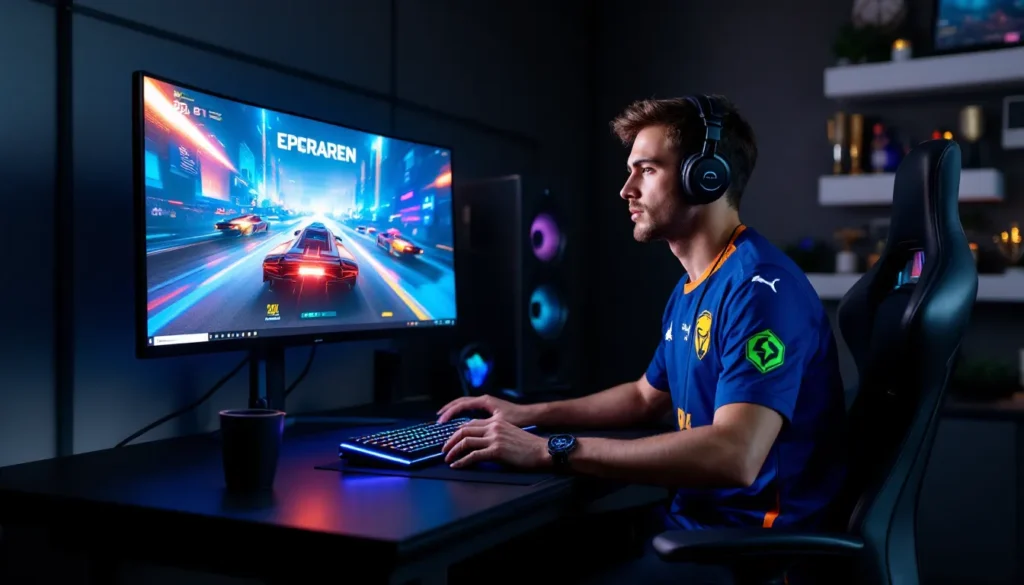
Nearly eleven years after its 2015 launch, Rocket League remains one of the most addictive competitive games on the market. What started as a quirky concept, rocket-powered cars playing soccer, has evolved into a global esports juggernaut with millions of active players across PC, PlayStation, Xbox, and Nintendo Switch. The game’s transition to free-to-play in September 2020 under Epic Games’ ownership only accelerated its growth, pulling in new audiences while keeping veterans hooked.
But does Rocket League still hold up in 2026? With a decade of updates, balance patches, and content additions behind it, the game faces stiffer competition from newer titles while wrestling with its own aging infrastructure. This review examines Rocket League’s current state across gameplay, content, competitive integrity, and value proposition to determine whether it deserves a spot in your rotation.
Key Takeaways
- Rocket League’s deceptively simple controls combined with an absurdly high skill ceiling make it one of the tightest competitive experiences available, rewarding mechanical mastery and precision over randomness.
- The free-to-play model with zero pay-to-win mechanics and seamless cross-platform play across PC, PlayStation, Xbox, and Switch removes financial barriers while ensuring healthy matchmaking populations.
- Rocket League’s esports ecosystem remains vibrant in 2026 with RLCS tournaments exceeding $2M prize pools and average viewership of 80K-150K concurrent viewers, proving the game’s longevity as a tier-one esport.
- New player onboarding and server inconsistency remain significant weaknesses, with inadequate tutorials and performance issues that could deter potential players despite the game’s compelling core mechanics.
- After eleven years, Rocket League shows its age in content cadence and cosmetic pricing, but the timeless gameplay loop and depth still make it exceptional for competitive players seeking skill-based multiplayer mastery.
What Is Rocket League and Why Does It Matter?
Rocket League is a vehicular soccer game developed by Psyonix where players control rocket-powered cars to hit an oversized ball into the opponent’s goal. Matches typically feature 1v1, 2v2, or 3v3 formats across five-minute regulation periods, with sudden-death overtime if scores are tied.
The premise sounds absurd on paper, but the execution is flawless. Rocket League strips away the mechanical complexity of traditional sports sims and racing games, leaving only pure physics-based competition. Cars boost, jump, flip, and fly through arenas with predictable but nuanced movement that rewards precision timing and spatial awareness.
What elevates Rocket League beyond novelty status is its competitive depth. The skill gap between Bronze and Grand Champion players is massive, veteran players execute aerial redirects, ceiling shots, and flip resets with muscle memory that takes thousands of hours to develop. Yet new players can still contribute meaningfully in casual matches within their first few hours, making the game accessible without sacrificing its ceiling.
The game’s cultural impact can’t be overstated. Rocket League Championship Series (RLCS) broadcasts regularly pull six-figure viewership numbers, with prize pools exceeding $6 million for major events. Professional players like GarrettG, Jstn., and Monkey Moon have become household names in esports circles. The game bridged the gap between traditional sports fans and gaming audiences in ways few titles have managed, proving that unconventional concepts can thrive when execution is tight.
Gameplay Mechanics: Where Simplicity Meets Depth
Core Controls and Learning Curve
Rocket League’s control scheme is deceptively simple. Players accelerate, steer, boost, jump, and dodge, that’s essentially it. There’s no gear shifting, no complex button combinations, no ability cooldowns. Every car handles identically (hitbox and turn radius aside), so mechanical execution depends entirely on player skill rather than vehicle stats.
The boost meter is the game’s central resource. Boost pads scattered across the arena provide 12% refills for small pads and full 100% refills for corner positions. Managing boost economy separates competent players from great ones, overcommitting on boost-hungry aerial attempts leaves you stranded, while efficient pathing keeps you in the play.
New players hit a comfortable baseline within 5-10 hours. You’ll learn to hit the ball consistently, rotate positions with teammates, and score basic ground shots. The game’s physics engine feels intuitive once you internalize how momentum carries through flips and how the ball reacts to different collision angles.
But that’s where the learning curve shifts from gentle slope to vertical cliff.
Advanced Techniques and Skill Ceiling
Rocket League’s mechanical ceiling is absurdly high, and the gap between intermediate and advanced play is enormous. Techniques that weren’t even discovered until years post-launch are now standard in Champion-ranked lobbies.
Key advanced mechanics include:
- Fast aerial: Double-jumping and boosting simultaneously to reach maximum aerial speed instantly rather than slow-floating upward
- Half-flip: A 180-degree recovery technique using dodge cancels to instantly reverse direction without losing speed
- Wave dash: Dodging into the ground at precise angles to gain burst speed without consuming boost
- Air roll shots: Rotating your car mid-flight to adjust ball contact points for unpredictable shot angles
- Flip resets: Touching all four wheels to the ball mid-air to regain your dodge, enabling infinite aerial maneuvers
- Speed flip: The fastest possible kickoff technique requiring frame-perfect diagonal dodges with air roll cancels
These aren’t flashy extras, they’re competitive necessities above Diamond rank. Training packs and workshop maps (on PC via Steam Workshop) provide structured practice environments, but mastery requires relentless repetition. Players regularly spend 30-60 minutes in free play before even queuing ranked matches.
The skill ceiling hasn’t stagnated either. New tech continues emerging even in 2026, with players finding micro-optimizations in flip timings and boost consumption patterns. This endless depth keeps veterans engaged but can intimidate returning players who took extended breaks. The meta has evolved so dramatically that Diamond players from 2020 would struggle in current Platinum lobbies.
Graphics, Audio, and Presentation
Visual Performance Across Platforms
Rocket League runs on Unreal Engine 4 (upgraded from UE3 in 2019), and while it won’t push modern GPUs to their limits, the visual presentation remains clean and functional. Arenas are deliberately uncluttered, no environmental distractions, no weather effects obscuring vision. Everything serves competitive clarity.
The game targets 60fps as its baseline across all platforms, with PC and current-gen consoles (PS5, Xbox Series X/S) easily pushing beyond 120fps with high refresh rate monitor support. Performance mode on PS5 and Series X maintains locked 120fps at 1080p, which is exactly what competitive players want. The Switch version remains the weakest performer, capped at 720p/60fps docked and 576p/60fps handheld with occasional frame drops during particle-heavy moments.
Visual customization has expanded significantly since launch. Arena variants offer different aesthetics, DFH Stadium at night versus day, Champions Field with its massive jumbotron, Forbidden Temple’s Egyptian theming, but all maintain identical dimensions and physics. Ball cam and camera settings are highly customizable, and most pros use tighter FOV settings (around 110°) with increased camera distance for maximum field awareness.
The art direction leans heavily on Psyonix’s signature neon-tinged, sci-fi aesthetic. It’s not photorealistic, but it doesn’t need to be. The simplified visual style keeps the focus on ball tracking and positional play, which is exactly where it belongs.
Sound Design and Soundtrack
Rocket League’s audio design is purely functional. Engine sounds, boost roars, and ball contact all provide critical feedback during play. The metallic clang when striking the ball dead-center versus the duller thud of a grazing hit tells you immediately whether your shot has power. Boost consumption has a distinct whoosh that helps you gauge fuel levels without constantly checking the HUD.
The soundtrack has seen multiple overhauls since launch. Early editions featured electronic tracks from artists like Hollywood Principle and Mike Ault. The current 2026 playlist spans EDM, synthwave, and licensed tracks through Monstercat collaborations. Honestly? Most competitive players mute music entirely to focus on game audio, but the soundtrack works fine for casual sessions.
One area where audio could improve: player audio isn’t well-balanced across platforms. Voice chat quality through in-game systems remains noticeably worse than Discord or party chat, so most coordinated teams use external communication. Not a dealbreaker, but it’s a quality-of-life issue that’s persisted for years.
Game Modes and Content Variety
Competitive Playlists and Ranked Play
Ranked play is Rocket League’s centerpiece. The competitive playlists include 1v1 Duel, 2v2 Doubles, 3v3 Standard, and occasionally 3v3 Solo Standard (removed in Season 3 but periodically returning based on community feedback). Each playlist maintains separate MMR (matchmaking rating) and ranks.
The ranking system spans nine tiers: Bronze, Silver, Gold, Platinum, Diamond, Champion, Grand Champion, and Supersonic Legend (added in Season 1 of the free-to-play era). Each tier (except SSL) has three divisions. Rank distribution follows a rough bell curve, with the majority of players sitting between Gold and Diamond.
Matches are swift, five minutes plus overtime, making ranked grinding feel snappy rather than tedious. Win streaks provide accelerated MMR gains for new accounts, helping smurfs and alts climb quickly (a double-edged sword). Season resets occur roughly quarterly, with soft MMR reductions that compress higher ranks while leaving lower tiers mostly intact.
Ranked rewards include season-specific titles, banners, and cosmetic items tied to your peak rank. The rewards aren’t groundbreaking, but chasing that next rank keeps players queuing “just one more.”
Casual Modes and Extra Game Modes
Casual playlists mirror competitive formats but without rank pressure or abandon penalties (though repeated leaving does trigger temporary matchmaking bans). Hidden MMR still exists, so casual isn’t a complete free-for-all, you’ll generally face similarly skilled opponents.
Extra Modes rotate through limited-time offerings and permanent alternatives:
- Rumble: Power-ups like boxing gloves, grappling hooks, and freeze rays add chaotic RNG to standard matches. It’s legitimately fun in short bursts and has its own ranked playlist.
- Dropshot: The floor is divided into hexagonal panels that break when struck by the ball. Goals score by dropping the ball through the floor into the opponent’s side. Requires completely different positional awareness from standard modes.
- Hoops: Basketball variant with elevated goals. Aerial control becomes mandatory, making it excellent mechanical practice disguised as casual fun.
- Snow Day: Hockey mode with a puck instead of a ball. The puck slides along surfaces rather than bouncing, fundamentally altering rotations and shot angles.
These modes range from worthwhile to forgettable. Rumble and Dropshot maintain healthy populations with dedicated communities, while Hoops and Snow Day see lighter traffic. Extra Modes ranked play exists but feels less refined than standard competitive, rank distribution skews oddly, and matchmaking quality suffers during off-peak hours.
The bigger content gap: there’s no proper single-player campaign or meaningful PvE content. Training packs provide custom scenarios created by the community (or Psyonix), but they’re purely mechanical drills rather than structured progression. Players looking for narrative-driven content or cooperative PvE modes won’t find them here. Rocket League is unabashedly multiplayer-focused.
The Competitive Scene and Esports Appeal
Rocket League’s esports ecosystem is one of the healthiest in competitive gaming. The Rocket League Championship Series (RLCS) has operated continuously since 2016, evolving from regional invitationals to a global circuit with regional leagues in North America, Europe, South America, MENA, Asia-Pacific, and Sub-Saharan Africa.
The 2025-26 RLCS season (Season 13) maintains a multi-stage format: regional splits with weekly open qualifiers feeding into major LAN events, culminating in the World Championship. Prize pools for majors regularly hit $500K-$1M, with the World Championship exceeding $2M. Organizations like G2 Esports, Team Vitality, and FaZe Clan field rosters, bringing mainstream esports investment to the scene.
What makes Rocket League compelling as an esport is its readability. Unlike MOBAs with 150 champions and complex ability interactions, or tactical shooters with cluttered visual information, Rocket League is immediately understandable: car hit ball, ball go in goal. Even non-players grasp the basics within minutes of tuning in. Yet the mechanical execution on display at the pro level is jaw-dropping, ceiling shot double taps, flip reset musty flicks, perfectly timed demos, creating a spectacle that’s genuinely exciting to watch.
Viewership numbers reflect this appeal. RLCS broadcasts average 80K-150K concurrent viewers on Twitch, spiking above 300K for World Championship finals. According to aggregated review metrics, Rocket League consistently ranks among the most-watched esports titles even though its smaller player base compared to juggernauts like League of Legends or Valorant.
The scene’s longevity is impressive, but cracks are showing. Tier-2 and tier-3 competition struggles financially, non-RLCS teams often operate at losses, and regional scenes outside NA/EU lack sponsorship infrastructure. Psyonix’s hands-off approach to grassroots tournament support means community-run events survive on passion rather than sustainability. Compared to Riot’s investment in Valorant’s tier-2 ecosystem, Rocket League’s developmental scene feels neglected.
Still, for a game over a decade old, the competitive scene remains vibrant and legitimate. New talent continues emerging from ranked ladders, and established pros can still make six-figure salaries from org contracts and tournament winnings. That’s more than most esports can claim in their eleventh year.
Customization, Progression, and Monetization
Vehicle Customization Options
Rocket League offers extensive cosmetic customization across car bodies, decals, paint finishes, wheels, rocket boosts, toppers, antennas, goal explosions, engine audio, and player anthems. Every element is purely cosmetic, there’s no pay-to-win, no stat advantages. Your tricked-out Titanium White Octane performs identically to the default model.
Car bodies do have different hitbox types: Octane, Dominus, Plank, Hybrid, Breakout, and Merc. These affect turn radius and ball contact geometry, but differences are subtle. The Octane hitbox dominates competitive play (used by ~70% of pros) due to its balanced height and versatility, but skilled players succeed with any hitbox.
Cosmetics drop from post-match rewards, Blueprint reveals (formerly Crates pre-2019), Event Challenges, and the Item Shop. The variety is staggering, thousands of items spanning eleven years of seasonal content, crossover collaborations (Batman, Fast & Furious, Stranger Things), and community-created designs.
Trade-up systems let players convert unwanted items into higher rarities, and player-to-player trading remains active. An entire economy exists around Titanium White variants, Black Market decals, and discontinued items. Just don’t expect to make real money, Epic cracked down on third-party trading sites, and legitimate item values have deflated significantly since 2020.
Free-to-Play Model and Battle Passes
Rocket League went free-to-play on September 23, 2020 (Season 1 of the new era), removing the $19.99 price tag and instantly quintupling the player base. Players who owned the game before the transition received “Legacy” status with cosmetic rewards and all previously released DLC cars.
The current monetization model centers on Rocket Pass, a seasonal Battle Pass priced at 1,000 Credits (~$9.99). Each pass includes 70 tiers of cosmetics, XP boosts, and Credit refunds (roughly 800-1,000 Credits back if you complete it). Premium tiers beyond 70 drop Painted variants of pass items, giving completionists endless grind potential.
Rocket Pass value is solid if you play regularly, 300-400 hours per season nets full completion, and the Credit refunds make it quasi-sustainable if you never spend refunded Credits elsewhere. But if you skip seasons, you permanently miss those items (no return in Item Shop rotation currently).
The Item Shop rotates daily with Featured and general sections, selling car bundles, goal explosions, and cosmetics for 500-2,200 Credits. Pricing feels steep, $20+ for a single car bundle is absurd when the base game is free. But it’s purely optional. Free players can still earn cosmetics through drops, challenges, and event currencies.
Blueprints replaced the Crate/Key system in December 2019. Post-match drops now reveal Blueprint schematics showing exactly what item you’ll get and its crafting cost (500-2,200 Credits depending on rarity). You can craft immediately, trade the Blueprint, or ignore it entirely. This eliminated loot box gambling but increased upfront costs, crafting a Black Market item runs 2,000+ Credits versus the old system’s ~$10 average key investment.
The monetization isn’t predatory, but it’s not generous either. Free players earn enough through gameplay to eventually unlock desired items, but expect slow progress. Paying accelerates cosmetic acquisition without affecting gameplay, which is the correct approach. Still, $20 car bundles in an eleven-year-old game feel tone-deaf when competitors offer more generous cosmetic economies.
Cross-Platform Play and Community Features
Rocket League pioneered mainstream cross-platform play years before it became industry standard. PC, PlayStation, Xbox, and Nintendo Switch players queue together seamlessly across all playlists. Epic Games Account integration (required since the free-to-play transition) ties progression, inventories, and friends lists across platforms.
Cross-platform parties work without friction, PC players can team with console friends directly through Epic’s social features. The only limitation: platform-specific items (like PlayStation-exclusive cars) remain locked to their origin platform, though they’re visible in your inventory across devices.
Cross-progression is equally robust. Your rank, items, and stats sync across platforms if linked to the same Epic account. Switching from PlayStation to PC for higher framerates? Everything carries over. This flexibility is fantastic and should be the baseline for all competitive games.
Community features, but, are barebones. The in-game Clubs system lets players create persistent teams with shared tags and progression stats, but functionality hasn’t evolved much since its 2017 introduction. No clan wars, no custom club cosmetics, no meaningful social features beyond a shared roster. Discord servers and external communities fill the gap, but in-game social tools feel neglected.
Toxicity remains an issue, as it does in any competitive game. Quick Chat options (“What a save.” spammed sarcastically) and text/voice abuse persist even though reporting systems. Psyonix introduced stricter chat bans and automated penalty systems in recent years, which reduced but didn’t eliminate toxicity. Playing with strangers in ranked requires thick skin or liberal use of the mute function.
Content creators and streamers maintain active Rocket League communities. Coaching services, trading Discord servers, and mechanics workshops thrive outside official channels. Popular resources include comprehensive game guides and community-driven content hubs that supplement the game’s limited tutorial systems. Psyonix could better integrate these community resources directly into the client rather than leaving new players to discover them independently.
Strengths and Weaknesses in 2026
What Rocket League Does Best
Mechanical depth without complexity: Rocket League’s genius lies in its input simplicity paired with execution difficulty. There’s no memorizing ability rotations or studying matchup charts, just you, the ball, and pure mechanical skill. This creates a uniquely satisfying mastery curve where improvement is tangible and rewarding.
Cross-platform done right: Seamless cross-play and cross-progression across all platforms sets the standard for how multiplayer games should function. No player fragmentation, no platform loyalty penalties, just queue and play.
Esports legitimacy: A decade of competitive infrastructure has produced one of gaming’s most watchable esports. The production value, prize pools, and talent development systems justify Rocket League’s status as a tier-one esport.
Fair monetization: Free-to-play access with zero pay-to-win mechanics means everyone competes on equal footing. Cosmetics are pricey, but they’re optional. This is how F2P should work.
Match pacing: Five-minute matches with minimal downtime respect player time. Whether you have 15 minutes or five hours, Rocket League accommodates your schedule without punishing short sessions.
Physics consistency: The ball physics and car handling are deterministic and reliable. Wonky interactions occur rarely enough that “the game screwed me” is almost never a legitimate excuse. Outcomes feel earned rather than RNG-dependent.
Areas That Could Use Improvement
Server inconsistency: Lag, packet loss, and server-side hit registration issues plague Rocket League more than they should for a game of this scale. Epic’s server infrastructure hasn’t kept pace with player growth, and high-level play frequently suffers from micro-stutters and desync.
New player onboarding: The tutorial teaches basic controls and nothing else. New players are dumped into matches with zero understanding of rotation, positioning, or boost management. The skill floor isn’t that high, but the game does little to help players reach it. Comprehensive training modules for intermediate concepts would dramatically improve new player retention.
Stale content cadence: Seasonal updates feel repetitive. New cosmetics and minor tweaks don’t substitute for meaningful content additions. The last genuinely novel feature was Tournaments in 2020. After six years of F2P operation, players expected more innovation.
Item Shop pricing: $20 for a car bundle or goal explosion is insulting. The pricing model feels lifted from Fortnite without accounting for Rocket League’s much smaller content scope. Reduce prices by 40% and sales volume would likely increase overall revenue.
Smurfing and alt accounts: F2P opened the floodgates for alternate accounts. Lower ranks are polluted with obvious smurfs, ruining new player experiences and distorting rank distributions. Epic’s account verification and smurf detection systems are inadequate.
Limited single-player value: Zero campaign, zero PvE, zero meaningful solo progression. If you don’t enjoy competitive multiplayer, Rocket League offers essentially nothing. Training packs provide mechanical practice but no narrative hooks or structured learning paths.
Platform disparity: Switch players are at a genuine disadvantage. 60fps versus 120fps+ on other platforms creates competitive imbalances. While cross-play is technically impressive, the performance gaps raise fairness questions in ranked environments.
Communication tools: Voice chat quality lags behind 2026 standards. In-game social features feel like afterthoughts. For a team-based competitive game, the communication infrastructure is embarrassingly outdated.
Conclusion
Rocket League in 2026 is a game that simultaneously feels timeless and overdue for reinvention. The core gameplay loop, the elegant physics, the skill expression, the competitive thrill, remains as addictive as it was in 2015. Mechanically, it’s still one of the tightest competitive experiences available, rewarding dedication and precision in ways few games match.
But eleven years is a long time. The content cadence has slowed to a crawl, server performance hasn’t kept pace with player expectations, and new player onboarding remains neglected. These aren’t dealbreakers for veterans already invested in the grind, but they’re legitimate barriers for potential newcomers wondering if Rocket League is worth starting in 2026.
The answer depends on what you want. If you’re chasing mechanical mastery, esports-level competition, or simply the purest skill-based multiplayer available, Rocket League delivers completely. The free-to-play model removes financial barriers, and cross-platform play ensures healthy matchmaking populations. You can sink 3,000 hours into this game and still find room for improvement, that depth is rare and valuable.
But if you need constant content updates, robust single-player modes, or cutting-edge production values, Rocket League will disappoint. It’s a competitive arena first and everything else a distant second.
For what it is, a car soccer game with absurd mechanical depth and legitimate competitive infrastructure, Rocket League remains exceptional. It’s showing its age in places, and Psyonix could absolutely do more to modernize the experience, but the foundation is rock solid. Eleven years in, it still deserves its spot in the conversation.
More Stories
Rocket League Camera Settings: The Ultimate 2026 Guide to Perfect Your View
The Coolest Rocket League Cars: Ultimate Style Guide for 2026
Justin Rocket League: The Rise of a Freestyle Legend and His Impact on Competitive Play