
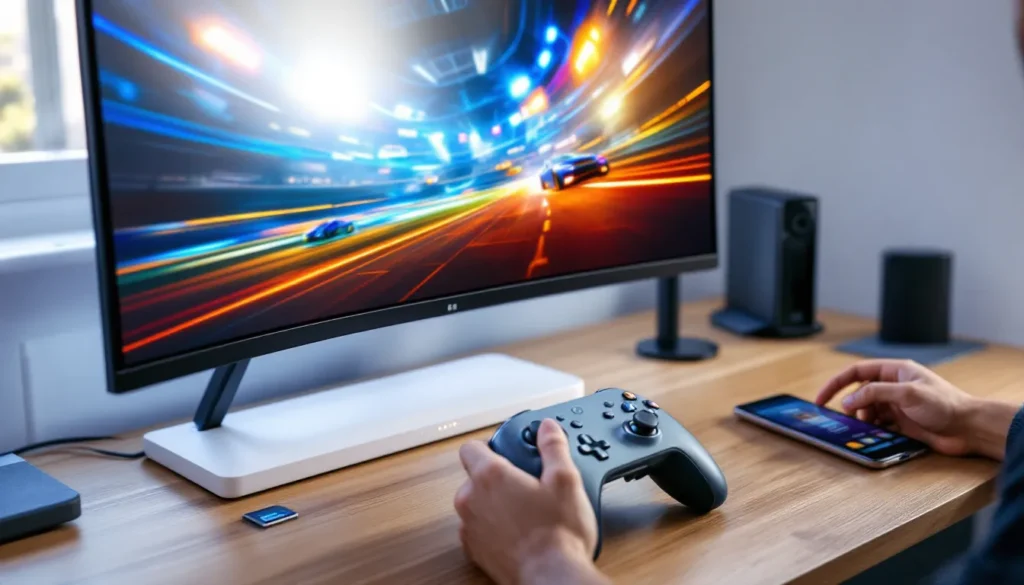
If you’re wondering whether you can take your aerial game portable, the short answer is yes, Rocket League has been available on Nintendo Switch since November 2017. But that’s just the beginning of the story. Since the game went free-to-play in September 2020 and Psyonix merged under Epic Games, a lot has changed for Switch players. Performance differences, cross-platform capabilities, and control options all shape the experience in ways that matter if you’re grinding ranked or just messing around in casual.
This guide breaks down everything Switch players need to know about Rocket League in 2026: how it runs, what you’ll need to download it, how cross-play works, and whether the platform can hold its own against PC and console competition. Whether you’re picking up the game for the first time or coming back after a break, here’s what the Switch version looks like right now.
Key Takeaways
- Yes, Rocket League is available on Nintendo Switch as a free-to-play title since November 2017, with no Nintendo Switch Online subscription required to play online.
- The Switch version runs at 720p/60 FPS in docked mode but experiences performance gaps compared to PC and current-gen consoles, making it better suited for casual than high-level competitive play.
- Full cross-platform play and cross-progression are supported on Rocket League for Switch, allowing you to party with friends on any platform and carry your inventory, ranks, and cosmetics across all devices.
- A Nintendo Switch Pro Controller is strongly recommended over Joy-Cons for Rocket League on Switch due to better stick quality and reduced input delay for executing advanced aerial mechanics.
- While Rocket League on Switch requires approximately 7.5 GB of free storage and a stable internet connection, most connectivity issues can be resolved by using a wired USB-to-Ethernet adapter and optimizing your server region settings.
Yes, Rocket League Is Available on Nintendo Switch
Rocket League launched on Nintendo Switch on November 14, 2017, marking the game’s first appearance on a handheld-hybrid platform. It’s been a permanent fixture on the eShop ever since, and with the game’s shift to free-to-play in September 2020, it became even more accessible to Switch owners.
You can download Rocket League directly from the Nintendo eShop at no cost. The game supports both docked and handheld modes, letting players queue into matches whether they’re grinding on the TV or commuting with the console in portable mode. All core game modes, Casual, Competitive, Extra Modes, and Limited-Time Events, are available on Switch, along with full access to seasonal content, the Item Shop, and the Rocket Pass.
Psyonix has maintained consistent update parity across platforms, meaning Switch players get the same seasonal updates, balance patches, and new content as PC, PlayStation, and Xbox. As of early 2026, the game is running on the same version across all platforms, with seasonal updates continuing to roll out every few months.
How to Download and Install Rocket League on Switch
System Requirements and Storage Space
Rocket League doesn’t demand much from the Switch hardware, but you’ll need to free up some space before downloading. The game requires approximately 7.5 GB of free storage as of the latest update in early 2026. If you’re running low on internal memory, a microSD card is a smart investment, especially if you’re juggling multiple digital titles.
The Switch itself needs to be running system firmware version 10.0.0 or higher to support the game’s latest features and stability patches. If you haven’t updated your console in a while, head to System Settings > System > System Update to pull the latest firmware.
A stable internet connection is required for downloading and for online play. While you can play offline modes like Free Play and local matches without internet, the bulk of Rocket League’s appeal lives in its online competitive and casual playlists.
Step-by-Step Installation Process
Downloading Rocket League on Switch is straightforward:
- Open the Nintendo eShop from your Switch home screen.
- Search for “Rocket League” using the search bar at the top.
- Select the game from the search results.
- Click “Download” (the game is free, so there’s no purchase step unless you’re grabbing DLC or Credits).
- Wait for the download to complete, depending on your connection speed, this can take anywhere from 10 to 30 minutes.
- Launch the game from your home screen once the installation finishes.
On first launch, you’ll be prompted to link or create an Epic Games account. This step is mandatory for accessing online features and cross-progression, so have your login info ready or create a new account if you don’t have one yet.
Performance and Graphics on Nintendo Switch
Docked Mode vs. Handheld Mode Performance
Rocket League’s performance on Switch is functional but noticeably scaled back compared to other platforms. In docked mode, the game targets 720p resolution and aims for a stable 60 FPS. Frame rate consistency is decent during standard 3v3 matches, though you might see occasional dips to the mid-50s during chaotic moments with multiple explosions or demolitions on-screen.
In handheld mode, the resolution drops further to maintain performance. Expect around 576p to 720p dynamic resolution depending on scene complexity. The target frame rate remains 60 FPS, but handheld mode is more prone to drops, especially in maps with heavy visual effects or when playing in crowded lobbies. The smaller screen helps mask some of the resolution compromises, but if you’re used to PC or current-gen console clarity, the difference is noticeable.
Visual settings on Switch are locked, there’s no graphics menu to tweak texture quality, shadows, or effects like you’d find on PC. Psyonix optimized the game to run within the Switch’s thermal and power constraints, prioritizing frame rate over visual fidelity.
Frame Rate and Resolution Differences
While 60 FPS is the target, maintaining it consistently on Switch requires some trade-offs. The game uses dynamic resolution scaling, which means the image quality can shift mid-match to preserve frame rate. You’ll notice this most in handheld mode during fast rotations or when the camera pans quickly across the field.
Compared to PC (which can hit 240+ FPS on high-end rigs) or PlayStation 5 and Xbox Series X (which run at 120 FPS in performance mode), the Switch version feels less responsive. Input lag is slightly higher, and the lower frame rate can make reading ball trajectories and executing precise aerial adjustments trickier. For casual play, it’s fine. For high-level competitive grinding, especially in Diamond rank and above, many players notice the performance gap.
Graphics are simplified on Switch as well. Textures are lower resolution, lighting effects are pared down, and some particle effects are reduced. Maps like Aquadome and Neo Tokyo, which are visually dense, see the most noticeable downgrades. But, the core gameplay loop remains intact, and if you’re playing primarily on Switch, you’ll adapt to the visual style quickly.
Cross-Platform Play and Progression
Playing With Friends on Other Platforms
Rocket League supports full cross-platform play across all platforms, PC (Steam and Epic Games Store), PlayStation 4, PlayStation 5, Xbox One, Xbox Series X
|
S, and Nintendo Switch. This means you can party up with friends regardless of what hardware they’re on, and you’ll all queue into the same matchmaking pool.
Cross-play is enabled by default. If you want to restrict matchmaking to Switch players only, you can disable cross-play in Settings > Gameplay > Cross-Platform Play. Keep in mind that turning off cross-play significantly increases queue times, especially in less populated regions or higher ranks.
Voice chat is supported through Epic’s in-game system, but many Switch players opt for Discord or other third-party apps since the Switch’s native audio setup can be clunky when trying to use voice chat through the console’s headphone jack.
Linking Your Epic Games Account for Cross-Progression
Cross-progression is one of the best features for Switch players. By linking your Epic Games account, all your inventory, competitive ranks, Rocket Pass progress, and cosmetics sync across every platform you play on. If you started on PC and want to jump into a few matches on Switch during a lunch break, everything carries over.
To enable cross-progression:
- Launch Rocket League on your Switch.
- When prompted, log in with your Epic Games account (or create one).
- If you’ve played on another platform, make sure that platform is also linked to the same Epic account.
- Head to the Epic Games account page to verify all your platforms are connected.
Once linked, your Primary Platform determines which inventory takes precedence if there are conflicts. You can change your Primary Platform once every 180 days, so choose carefully.
Competitive ranks, tournament rewards, and seasonal rewards all sync. The only things that don’t carry over are platform-specific items (like certain legacy DLC cars from before the Epic Games merger) and any items that were restricted due to licensing issues.
Controls and Gameplay Experience on Switch
Using Joy-Cons vs. Pro Controller
Playing Rocket League with Joy-Cons is possible, but it’s far from ideal. The smaller analog sticks and less ergonomic grip make precise aerial control and fast flicks harder to execute consistently. Deadzone issues and stick drift, common problems with Joy-Cons, can seriously mess with your ability to half-flip or air roll smoothly.
The Nintendo Switch Pro Controller is the better option by a wide margin. Its larger analog sticks, better build quality, and more comfortable grip make it easier to execute advanced mechanics like fast aerials, wave dashes, and ceiling shots. Most competitive Switch players use a Pro Controller or a third-party alternative with similar ergonomics.
If you’re coming from PlayStation or Xbox, you might find the Pro Controller’s button layout and stick tension slightly different. The sticks are a bit looser than DualSense or Xbox controllers, which can affect muscle memory for quick directional changes. It’s not a dealbreaker, but expect a short adjustment period.
For players who want to use their existing controllers, third-party adapters like the 8BitDo Wireless USB Adapter or the Mayflash Magic-NS allow you to connect DualSense, DualShock 4, or Xbox controllers to the Switch. This is a solid workaround if you’re already comfortable with a specific controller layout.
Customizing Control Settings for Optimal Performance
Rocket League’s default control scheme on Switch is functional but not optimized for high-level play. Most experienced players rebind key actions to reduce finger movement and improve reaction time. Here are a few common tweaks:
- Air Roll Left/Right: Bind these to L1/R1 (or L/R on the Pro Controller) for easier aerial control. Default air roll on X (or square) forces you to take your thumb off boost, which slows down recoveries.
- Boost: Many players keep boost on B (circle equivalent) but rebind jump to L1/R1 to enable faster flip cancels and flip resets.
- Ball Cam Toggle: Keep this on a face button (usually Triangle/Y) for quick switches between ball cam and car cam.
- Powerslide and Air Roll: If you’re not using directional air roll, binding both powerslide and air roll to the same button (like L1) is common since you’ll never need both simultaneously.
Deadzone settings are crucial on Switch due to potential stick drift. Head to Settings > Controls > Advanced and adjust:
- Controller Deadzone: Start at 0.15 and increase if you notice phantom inputs.
- Dodge Deadzone: Keep this around 0.50 to 0.60 to avoid accidental front/back flips.
- Aerial Sensitivity and Steering Sensitivity: These are personal preference, but most players keep them between 1.30 and 1.50 for a balance of precision and responsiveness.
Experiment in Free Play or custom training packs before jumping into ranked. Small tweaks can make a noticeable difference in consistency.
Rocket League Switch vs. Other Platforms: Key Differences
Visual and Performance Comparisons
The gap between Switch and other platforms is most obvious in visuals and frame rate. On PC, players with mid-to-high-end rigs can push 144 FPS or higher at 1080p or 1440p with maxed settings. PlayStation 5 and Xbox Series X hit 120 FPS in performance mode at dynamic 4K, offering a smoother and more responsive experience than Switch’s locked 60 FPS at 720p.
Texture quality, shadow resolution, and particle effects are all dialed back on Switch. Maps with complex lighting, like Champions Field or Utopia Coliseum, look noticeably flatter. Boost trails and goal explosions are less detailed, and some environmental animations are simplified or removed.
Loading times on Switch are slower than on PS5 or Series X, both of which benefit from SSD storage. Expect 15–20 seconds to load into a match on Switch versus 5–10 seconds on current-gen consoles. It’s not a massive difference, but it adds up over multiple sessions.
One area where Switch holds up is in online stability. As long as your internet connection is solid, matchmaking and server performance are on par with other platforms. Input delay is slightly higher on Switch due to the combination of lower frame rate and wireless Joy-Con/Pro Controller latency, but it’s not game-breaking for most players.
Competitive Viability on Switch
Can you compete at a high level on Switch? Yes, but you’ll be at a disadvantage against players on PC or current-gen consoles. The lower frame rate, reduced visual clarity, and slightly higher input lag make it harder to execute advanced mechanics consistently. Reading bounces, tracking the ball in the air, and reacting to fast-passing plays all require split-second precision that the Switch’s performance limitations can hinder.
That said, plenty of players have hit Champion and even Grand Champion ranks on Switch. Many competitive players on Nintendo platforms have proven that skill and game sense can compensate for hardware limitations. If you’re grinding ranked on Switch, focus on positioning, rotation, and decision-making, areas where performance gaps matter less than raw mechanical speed.
For tournament play or RLCS aspirations, most serious competitors migrate to PC or next-gen consoles. The performance ceiling on Switch is just too low for the highest levels of play, where frame-perfect inputs and instant visual feedback are critical.
Is Rocket League Free-to-Play on Switch?
Yes, Rocket League is completely free-to-play on Nintendo Switch. Psyonix made the game free-to-play across all platforms in September 2020, removing the initial purchase barrier. You can download and play all core modes, Casual, Competitive, Extra Modes (Rumble, Hoops, Dropshot, Snow Day), and Tournaments, without spending a cent.
The free-to-play model is supported by microtransactions. The Item Shop rotates cosmetic items daily, and the Rocket Pass offers a tiered progression system with both free and premium tracks. The premium pass costs 1,000 Credits (roughly $10), and it unlocks additional cosmetic rewards as you level up each season.
Credits are the in-game currency and can be purchased through the eShop. Prices range from 500 Credits for $4.99 up to 6,500 Credits for $49.99. Credits are used to buy items from the Item Shop, trade with other players (on platforms that support it), and unlock the premium Rocket Pass.
Switch players can also earn free cosmetics through Challenges, Drops, and Tournament Rewards. While the rate of free item drops has slowed since the free-to-play transition, you can still build a respectable inventory without spending money if you’re patient.
Online Play and Nintendo Switch Online Requirements
To play Rocket League online on Nintendo Switch, you do not need a Nintendo Switch Online subscription. This is a major perk, most first-party and third-party multiplayer games on Switch require NSO, but Rocket League is an exception.
Because Rocket League runs on Epic’s backend servers and not Nintendo’s infrastructure, all online features, including matchmaking, competitive play, tournaments, and private matches, are accessible without an NSO membership. You just need a free Epic Games account and a stable internet connection.
This also means you won’t have access to NSO-specific features like cloud saves through Nintendo’s service, but Rocket League handles progression and saves through Epic’s cloud sync anyway. As long as your Epic account is linked, your data is backed up automatically.
If you’re playing other multiplayer games on Switch that do require NSO, you might already have a subscription. But if Rocket League is your primary online game, you can skip the $19.99/year cost and play for free.
Common Issues and Troubleshooting Tips
Connection Problems and Lag Solutions
Lag and connection issues are the most common complaints from Switch players. Here’s how to diagnose and fix them:
- Check Your NAT Type: Head to System Settings > Internet > Test Connection. If your NAT type is C or D, you’ll experience matchmaking issues and higher latency. Contact your ISP or adjust your router settings to open NAT (Type A or B).
- Use a Wired Connection: The Switch’s Wi-Fi card is notoriously weak. If you’re playing docked, grab a USB-to-Ethernet adapter (the official HORI adapter works well) for a stable connection. This alone can cut ping by 10–20 ms.
- Close Background Applications: Suspend or close any other software running on your Switch to free up system resources.
- Select Specific Server Regions: In Settings > Gameplay, deselect distant server regions. Stick to servers within 100 ms ping for the best experience.
If you’re still seeing rubber-banding or high ping, the issue might be on Psyonix’s end. Check the server status on gaming news sites or the official Rocket League Twitter for outage reports.
Download and Update Errors
If the game won’t download or update:
- Free Up Storage: The eShop won’t start a download if you don’t have enough free space. Archive or delete unused games to clear at least 8 GB.
- Restart Your Console: Hold the power button for three seconds, select Power Options > Restart, and try downloading again.
- Check for System Updates: Outdated firmware can block downloads. Head to System Settings > System > System Update.
- Re-Download from the eShop: If the download is stuck or corrupted, cancel it, go back to the eShop, and start fresh.
Epic Account Linking Errors are another frequent issue. If you’re stuck on the login screen or get an error when linking accounts, try these steps:
- Close Rocket League completely.
- Log into your Epic Games account on a web browser and verify your email.
- Disconnect any old platform links that might conflict (like an old PSN or Xbox account you no longer use).
- Restart the game and try linking again.
If problems persist, Epic’s support team is responsive, submit a ticket through their help center with your Epic ID and a description of the issue. Players have also found helpful troubleshooting guides on gaming sites when official support is slow.
Conclusion
Rocket League on Switch is a solid option for players who value portability and cross-platform flexibility over raw performance. The game runs well enough for casual and mid-level competitive play, and features like cross-progression and free-to-play access make it easy to pick up and play alongside friends on any platform.
The performance gap is real, 60 FPS at 720p with occasional frame drops isn’t going to rival PC or PS5, but the core gameplay loop is intact. If you’re grinding Grand Champion on a mechanical level, you’ll feel the limitations. For everyone else, the Switch version delivers a competent Rocket League experience that fits in your backpack.
Whether you’re queueing into casual matches during a commute or grinding ranked in docked mode, the Switch version is accessible, functional, and still supported with the same updates as every other platform. Just grab a Pro Controller, tweak your settings, and you’re good to go.
More Stories
Rocket League Camera Settings: The Ultimate 2026 Guide to Perfect Your View
The Coolest Rocket League Cars: Ultimate Style Guide for 2026
Justin Rocket League: The Rise of a Freestyle Legend and His Impact on Competitive Play