
Sound plays a vital role in many industries, from music production and broadcasting to manufacturing, research, and quality control. While human hearing is powerful, it is also subjective. What sounds clear to one person may seem distorted to another. This is why objective measurement tools are essential when accuracy, consistency, and repeatability matter.
Analysing audio signals allows professionals to move beyond perception and work with precise data. By breaking sound down into measurable components, it becomes possible to identify issues, optimise performance, and ensure standards are met across different environments.
Why Audio Analysis Is Important
Audio signals are complex. They consist of multiple frequencies, varying amplitudes, harmonics, noise, and transient elements that change over time. In professional settings, even small imperfections can affect overall performance. For example, unwanted noise in a recording, distortion in a speaker system, or imbalance in a production line can lead to poor results or product failure.
Objective analysis helps uncover problems that may not be obvious during casual listening. It also provides a common reference point, allowing teams to communicate clearly using measurable parameters rather than subjective descriptions like “too sharp” or “not clear enough.”
Key Parameters in Sound Measurement
When analysing audio, several characteristics are commonly examined. Frequency response shows how different frequencies are reproduced or amplified. Amplitude and level measurements indicate loudness and signal strength. Harmonic distortion reveals unwanted frequencies introduced by equipment, while noise analysis highlights background interference.
Time-based measurements are equally important. They help identify delays, echoes, or transient behaviour that can affect clarity and timing. Together, these parameters provide a complete picture of how sound behaves in a system.
Applications Across Multiple Fields
Audio analysis is widely used in music and broadcasting to ensure high-quality recordings and balanced mixes. Sound engineers rely on measurement data to tune speakers, design studios, and verify equipment performance. In live sound environments, analysis helps manage acoustics and prevent feedback issues.
In manufacturing and product development, audio measurement supports quality control for microphones, headphones, speakers, and electronic components. Research and education also depend on accurate sound analysis to study acoustics, signal processing, and human perception.
Even in industrial settings, sound analysis can be used to monitor machinery. Changes in sound patterns often indicate wear or malfunction, making audio measurement a valuable diagnostic tool.
From Listening to Visualisation
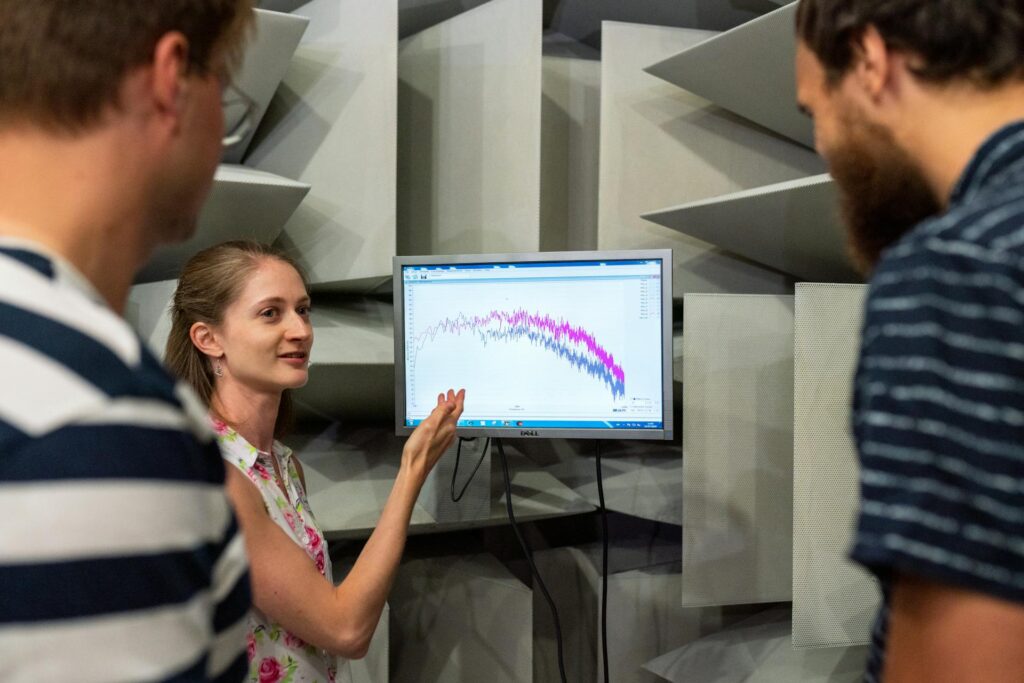
One of the most powerful aspects of sound measurement is visual representation. Graphs and charts transform sound into data that can be examined in detail. Frequency spectra, waveform displays, and level meters allow users to see exactly what is happening within a signal.
Visualisation makes comparison easier. It allows before-and-after analysis, trend monitoring, and precise adjustments that would be difficult to achieve by listening alone. This is especially useful when consistency is required across multiple units or installations.
Digital Advancements in Audio Measurement
Modern audio measurement tools benefit greatly from digital technology. High-resolution sampling, real-time processing, and advanced software analysis have expanded what is possible. Users can now capture detailed data, apply filters, store results, and perform complex comparisons with ease.
Automation has also improved efficiency. Many systems can run predefined tests, generate reports, and flag issues automatically. This reduces human error and speeds up workflows, particularly in production and testing environments.
Accuracy, Calibration, and Best Practices
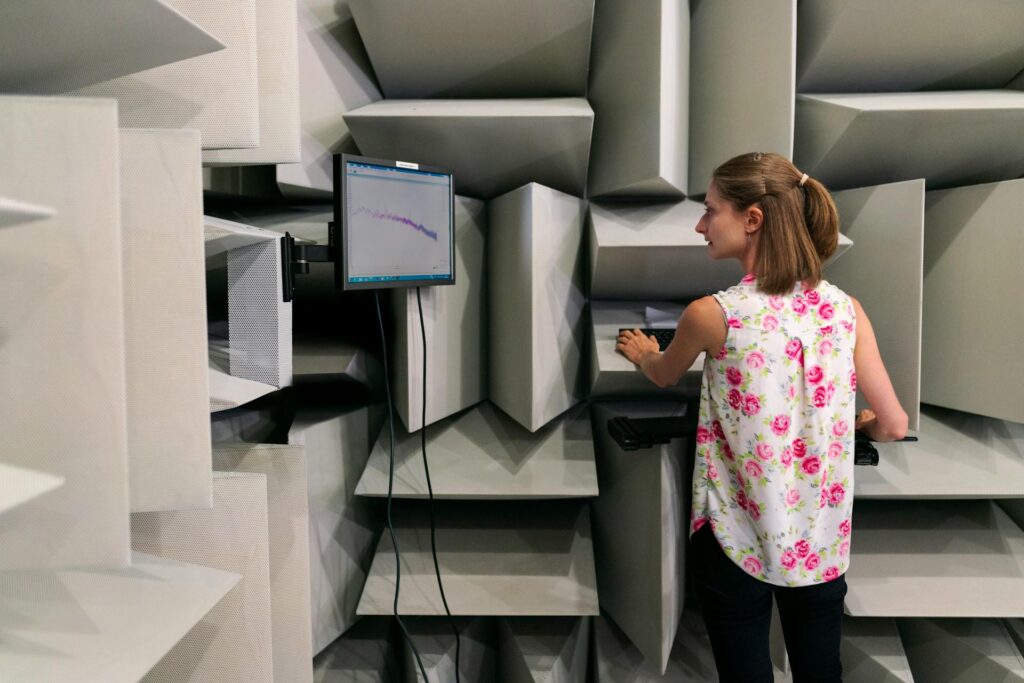
Reliable results depend on proper calibration and correct setup. Measurement devices must be calibrated regularly to ensure accuracy. Environmental factors such as background noise, reflections, and temperature can also influence results, so controlled conditions are important whenever possible.
Using appropriate reference signals and following standardised procedures helps ensure consistency. When measurements are repeatable and traceable, data becomes more meaningful and easier to compare over time.
The Role of the Audio Analyser in Professional Work
Within sound measurement and evaluation, the audio analyser serves as a central tool for examining and interpreting audio signals objectively. By providing precise data on frequency, level, distortion, and noise, it enables professionals to make informed decisions based on measurable facts rather than subjective impressions.
Its use supports higher quality, better consistency, and improved performance across a wide range of audio-related applications.
Conclusion
Sound is both an art and a science. While listening remains important, objective measurement is essential when precision, reliability, and repeatability are required. By analysing audio signals in detail, professionals gain deeper insight into performance, identify issues early, and optimise systems with confidence.
As technology continues to evolve and audio applications become more demanding, accurate sound measurement remains a cornerstone of quality and innovation. With the right tools, clear data, and informed interpretation, sound can be shaped, controlled, and perfected to meet the highest standards.
More Stories
What Is an Anonymous Proxy Server
How Esim Technology Is Shaping The Future Of Mobile Connectivity In The Us
Tech Tools for Discreet Urban Socializing